Global perishables logistics is no longer just about moving goods from one point to another—it is about placing infrastructure in the right locations to ensure speed, efficiency, and product integrity. A strong warehouse location strategy is one of the most critical factors in maintaining a reliable cold chain across the United States.
As demand for fresh produce, seafood, flowers, and temperature-sensitive goods continues to grow, logistics providers must adapt by positioning their infrastructure closer to consumption hubs. LCX Fresh supports modern cold chain management through a strategic infrastructure model designed for high-value perishables.
Understanding how a well-executed warehouse location strategy works provides valuable insight into how modern supply chains reduce spoilage, improve delivery times, and scale to meet global demand. This approach builds on key concepts such as perishables logistics and temperature-controlled distribution systems.
Why Warehouse Location Matters
In temperature-controlled logistics, time and distance directly impact product quality. The longer a shipment is exposed to transit conditions, the greater the risk of temperature deviations and spoilage.
A strong warehouse location strategy minimizes these risks by reducing transit times and ensuring faster access to key markets. Strategically placed facilities allow companies to shorten delivery windows, maintain consistent temperature control, reduce handling points, and improve overall supply chain efficiency.
According to the Food and Agriculture Organization (FAO), improving logistics infrastructure is essential to reducing food loss across global supply chains. https://www.fao.org/food-loss-and-food-waste/en/
By positioning warehouses near major transportation hubs and consumption centers, companies can better protect temperature-sensitive goods throughout their journey.
The seasonal harvest cycles outlined in our Latin America Produce Export Calendar 2026: Complete Guide for Cold Chain Logistics help explain why strategically positioned warehousing is critical for efficient distribution.
LCX Fresh Warehouse Network
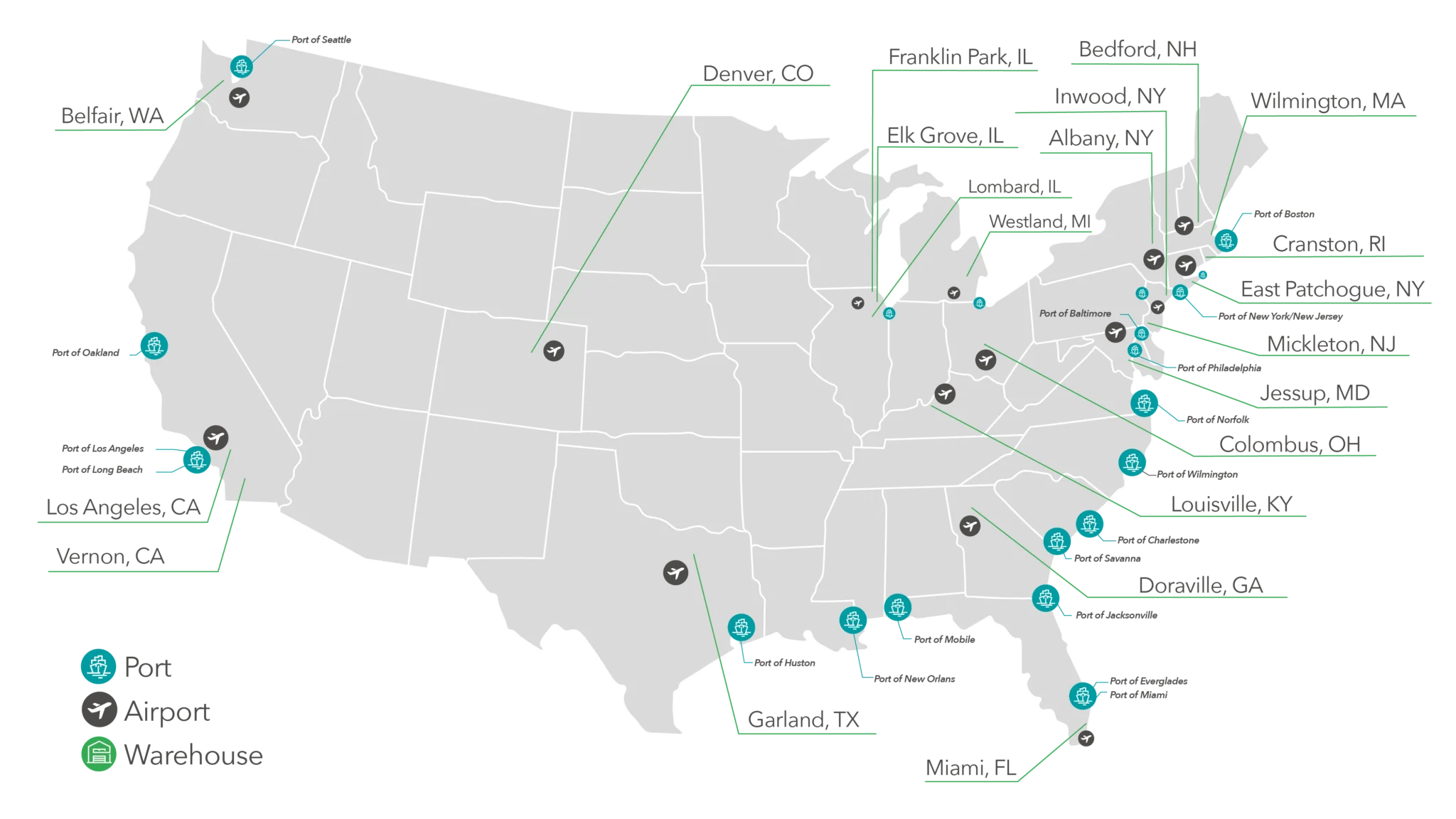
LCX Fresh has built its operations around a carefully planned warehouse location strategy that connects international supply with domestic demand.
With facilities in key logistics hubs such as Miami, Los Angeles, and New York (JFK area), LCX Fresh ensures efficient entry points for imports from Latin America and other global regions.
These locations provide direct access to major airports for air cargo, seaports for refrigerated shipments, and national distribution networks for final delivery.
Explore the full network here: warehouse locations
This infrastructure supports scalable fresh logistics networks that can adapt to fluctuating demand while maintaining consistent service levels.
Proximity to Entry Points
One of the most important elements of a successful warehouse location strategy is proximity to ports and airports.
Perishable goods arriving by air or sea require immediate transfer to temperature-controlled environments. Delays at this stage can significantly impact product quality.
Strategically located warehouses allow for rapid unloading, reduced exposure to ambient temperatures, and faster coordination with customs processes.
The International Air Transport Association (IATA) emphasizes that proper handling at transfer points is critical for maintaining cold chain integrity. https://www.iata.org/en/programs/cargo/perishables/
This is especially relevant when managing high-value and time-sensitive shipments that depend on precise handling.
Reducing Transit Time to Final Markets
Another key benefit of an optimized warehouse location strategy is faster distribution to end markets.
By positioning facilities near major population centers, LCX Fresh can shorten delivery routes, improve service levels, reduce transportation costs, and enhance product freshness upon arrival.
This is particularly important for industries such as fresh produce, seafood, and flowers, all part of LCX Fresh’s industries served.
Efficient placement of warehouses supports temperature-controlled logistics by minimizing the time products spend in transit.
Integration with Cold Storage
Warehouses are not just storage facilities—they are active distribution hubs.
LCX Fresh integrates its warehouse location strategy with advanced cold storage facilities and optimized cold storage strategies to ensure seamless movement of goods.
These facilities support temperature-controlled storage, inventory management, rapid order fulfillment, and cross-docking operations.
This integration reduces dwell time and helps minimize risk during handling and storage.
Air Freight and Multimodal Logistics
Strategic warehouse placement is essential for supporting multimodal logistics operations.
Facilities near major airports enable efficient handling of air cargo, allowing for faster distribution of high-value and time-sensitive goods.
This capability plays a key role in balancing speed and efficiency within modern supply chains.
At the same time, proximity to seaports allows for efficient handling of larger shipments transported via refrigerated containers.
By combining multiple transportation modes, LCX Fresh strengthens its fresh logistics networks and improves operational flexibility.
Enhancing Last-Mile Delivery
The final stage of delivery is often the most sensitive in the cold chain.
A well-designed warehouse location strategy supports efficient last-mile distribution by positioning inventory closer to end customers.
This reduces delivery times, minimizes exposure to temperature fluctuations, and improves overall service quality.
Technology and Visibility
Modern warehouse operations rely on advanced technology to maintain efficiency and control.
LCX Fresh incorporates real-time temperature monitoring, warehouse management systems, and inventory tracking tools to ensure full visibility across operations.
Organizations like GS1 emphasize the importance of traceability in supply chains. https://www.gs1.org/standards/traceability
These technologies enhance performance and allow for better decision-making across logistics networks.
Managing Risk
Risk management is a critical component of any warehouse location strategy.
Strategically located facilities help mitigate risks such as transportation delays, congestion, infrastructure limitations, and temperature deviations.
By distributing operations across multiple locations, LCX Fresh reduces dependency on single points of failure and enhances supply chain resilience.
The World Bank highlights the importance of logistics infrastructure in improving global trade performance. https://www.worldbank.org/en/topic/trade
Sustainability Benefits
Efficient warehouse placement also contributes to sustainability.
By reducing transportation distances and optimizing distribution routes, companies can lower fuel consumption, reduce emissions, and minimize product waste.
A strong warehouse location strategy supports both environmental responsibility and operational efficiency.
Scaling for Future Demand
As global demand for perishable goods continues to grow, logistics networks must scale accordingly.
LCX Fresh’s approach to warehouse location strategy allows for expansion into new markets, increased storage capacity, and improved distribution efficiency.
Conclusion
Strategic warehouse placement is a cornerstone of modern cold chain logistics. By positioning facilities in key U.S. markets, LCX Fresh ensures faster transit times, improved temperature control, and greater supply chain efficiency.
A well-executed warehouse location strategy not only reduces spoilage and operational risk but also enhances the overall performance of logistics networks.
Explore all LCX Fresh services or request a quote to optimize your cold chain operations today.