Temperature is one of the most important variables in perishable logistics, but there is no single temperature that works for every temperature-sensitive product.
Fresh flowers, seafood, leafy greens, berries, tropical fruits, dairy products, and frozen foods can require very different conditions during transportation. Even products within the same category may have different requirements depending on variety, maturity, packaging, product condition, and transit time.
For exporters, importers, distributors, and retailers, selecting the correct shipping temperature is therefore not simply about keeping cargo cold. It is about maintaining the conditions appropriate for the specific commodity throughout transportation, handling, storage, and distribution.
There is no universal shipping temperature for all perishables. Recommended conditions depend on the commodity, variety, packaging, maturity, transit time, and whether the product is fresh, chilled, or frozen. Successful cold chains maintain product-specific temperature ranges while minimizing fluctuations between logistics stages.
The broader principles explained in Cold Chain Management: The Complete Guide to Protecting Perishable Cargo demonstrate why temperature must remain controlled across the entire journey rather than during transportation alone.
Why There Is No Universal Shipping Temperature
A common cold chain misconception is that colder automatically means better.
That is not always true.
Temperature influences biological, chemical, and microbial processes differently depending on the product. Some commodities benefit from conditions close to freezing, while others can suffer damage when temperatures become too low.
Bananas are a useful example. UC Davis Postharvest Research and Extension identifies approximately 13–14°C (56–58°F) as an optimum range for storage and transport of mature-green Cavendish bananas. By contrast, strawberries are typically maintained near 0°C (32°F).
The difference demonstrates why professional cold chain planning begins with the commodity—not with a universal refrigeration setting.
Perishable Shipping Temperature Quick Reference
The following examples provide a useful starting point for understanding how widely conditions can vary:
| Product | Typical Reference Condition | Key Consideration |
|---|---|---|
| Roses | 0–1°C / 32–34°F | Pre-cooling and temperature stability |
| Carnations | 0–1°C / 32–34°F | Highly sensitive to ethylene |
| Strawberries | 0 ± 0.5°C / 32 ± 1°F | Rapid cooling; 90–95% RH |
| Romaine lettuce | Near 0°C / 32°F | High humidity; ethylene sensitivity |
| Bananas, mature-green | 13–14°C / 56–58°F | Avoid excessively low temperatures |
| Refrigerated seafood | ≤4°C / 40°F* | Time and temperature are critical |
| Frozen foods | ≤-18°C / 0°F* | Maintain frozen conditions |
*FDA consumer food-safety guidance recommends refrigeration at 40°F (4°C) or below and freezer temperatures at 0°F (-18°C). Individual commercial products and shipments may require more specific conditions.
Important: These ranges are general reference conditions, not universal shipment specifications. Exact requirements can vary by species, commodity, variety, maturity, packaging, product condition, transit duration, shipper instructions, customer specifications, and applicable regulatory requirements.
Flowers: Temperature, Humidity and Ethylene Matter
Fresh-cut flowers illustrate why shipping temperature is only one part of successful perishable transportation.
Many cut flowers benefit from rapid cooling and stable low-temperature conditions, but variety-specific requirements remain important.
UC Davis, for example, identifies 0–1°C (32–34°F) as the optimum storage temperature for both roses and carnations. It also notes that some rose cultivars are sensitive to ethylene, while carnations are particularly ethylene sensitive.
This means flower logistics must consider several variables simultaneously:
- Temperature
- Humidity
- Ethylene exposure
- Air circulation
- Packaging
- Pre-cooling
- Handling time
- Physical protection
Temperature fluctuations can also create condensation, while excessive handling can damage delicate blooms even when temperature conditions remain appropriate.
As explored in Flower Cold Chain Logistics: How Temperature, Timing, and Handling Protect Every Bloom, maintaining flower quality requires coordination between cooling, handling, transportation, storage, and distribution.
For floriculture shipments, the objective is not simply arrival. It is preserving enough postharvest quality to provide retailers and consumers with strong remaining vase life.
Seafood: Time and Temperature Work Together
Seafood introduces a different cold chain challenge.
Fresh fish and shellfish are highly perishable, making rapid cooling and continuous temperature management particularly important.
FDA consumer guidance recommends keeping seafood refrigerated or properly iced and states that seafood intended for use within two days should be stored at 40°F (4°C) or below.
However, commercial seafood logistics may use more product-specific conditions depending on species, processing method, packaging, whether the product is fresh or frozen, and applicable requirements.
This is why shipping temperature should always be evaluated together with time.
A shipment maintained under appropriate refrigeration but subjected to excessive delays can still lose valuable freshness and commercial life.
The operational requirements discussed in Seafood Cold Chain Logistics: Protecting Freshness from Catch to Customer show why seafood supply chains depend on rapid movement from harvest or processing through storage, transportation, and distribution.
Frozen seafood presents another distinction.
FDA guidance uses 0°F (-18°C) as the standard freezer temperature for food storage. Maintaining frozen conditions consistently is important because repeated warming and refreezing can negatively affect product quality.
Fresh Produce: One Category, Many Temperature Requirements
Fresh produce demonstrates perhaps more clearly than any other category why a universal temperature chart can be misleading.
Consider three examples:
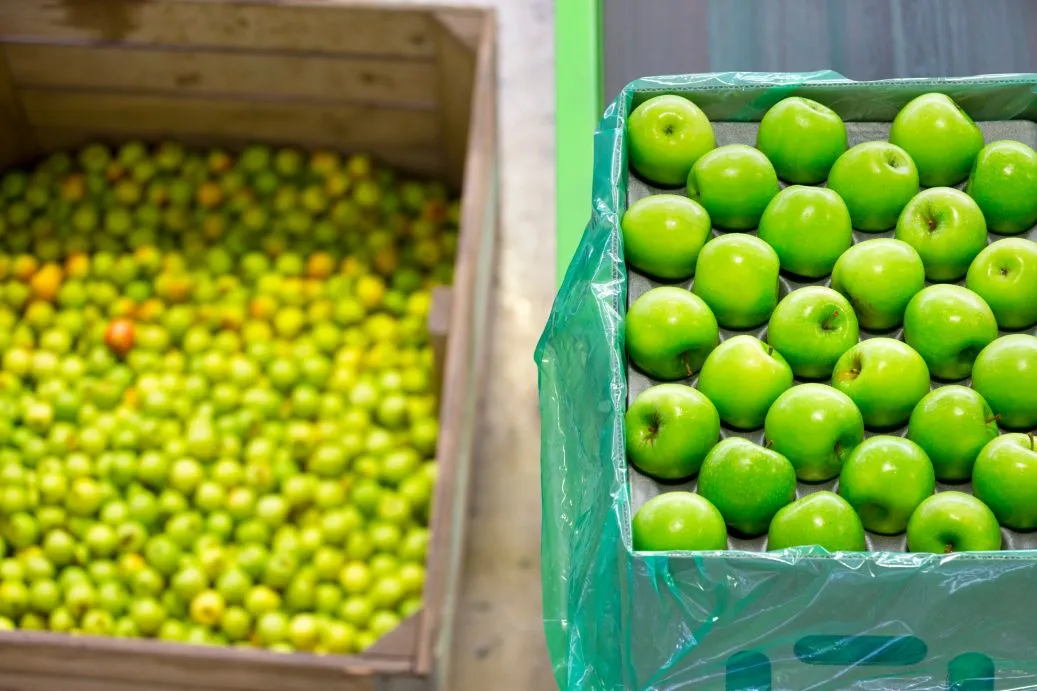
Strawberries: UC Davis identifies an optimum temperature of 0 ± 0.5°C (32 ± 1°F) and relative humidity of 90–95%.
Romaine lettuce: storage near 0°C (32°F) is recommended to optimize postharvest life, with relative humidity above 95%.
Bananas: mature-green Cavendish bananas require considerably warmer storage and transport conditions of approximately 13–14°C (56–58°F).
The contrast is significant.
Placing all three products under the same refrigeration setting could protect one commodity while damaging another.
This is why the strategies discussed in How Cold Chain Logistics Helps Extend Shelf Life for Fresh Produce emphasize commodity-specific temperature management from harvest through distribution.
Successful shipping temperature planning starts by understanding the product itself—and then designing the cold chain around those requirements.
Fresh Produce: Why Temperature Requirements Vary
Fresh produce is one of the clearest examples of why shipping temperature must be determined at the commodity level.
Fruits and vegetables remain biologically active after harvest. Respiration, ripening, moisture loss, and other processes continue throughout transportation and storage. Appropriate temperatures can slow many of these processes, but excessively low temperatures can damage certain commodities.
This is particularly important with tropical and subtropical produce. Bananas, for example, require considerably warmer conditions than strawberries or leafy greens.
Humidity also matters. FDA guidance recommends refrigerating perishable fruits and vegetables such as strawberries, lettuce, herbs, and mushrooms at 40°F (4°C) or below, but individual commodities can require more specific conditions to maintain optimum quality.
Successful produce logistics therefore requires coordinating pre-cooling, storage, handling, transportation, and distribution according to the characteristics of the individual commodity.
Storage Temperature vs. Shipping Temperature
Are storage and shipping temperatures always the same?
Not necessarily.
A recommended storage condition provides an important reference, but transportation introduces additional variables such as:
- Transit duration
- Packaging
- Air circulation
- Reefer configuration
- Loading patterns
- Outside temperatures
- Product condition
- Handoffs between facilities
The objective of refrigerated transportation is generally to maintain the appropriate product conditions, not compensate for inadequate pre-cooling before departure.
This makes the transition from cold storage into transportation especially important.
The operational process described in Perishable Cargo Handling: What Happens Between Arrival, Cold Storage, and Distribution? shows how loading docks, staging areas, inspections, transfers, and other handoffs can become vulnerable points even when storage and transportation environments are individually well controlled.
Why Temperature Stability Matters
Maintaining an appropriate shipping temperature is only part of the equation.
Stability matters too.
Repeated temperature fluctuations can contribute to quality deterioration and may create condensation or other undesirable conditions depending on the commodity.
Potential temperature breaks can occur during:
Cold Storage → Staging
Staging → Loading
Truck → Airport Terminal
Terminal → Aircraft
Aircraft → Destination Facility
Cold Storage → Final Distribution
This is why IATA emphasizes appropriate handling, storage, environmental conditions, and minimizing delays throughout the cargo process for perishable shipments.
The strategies explored in Reducing Spoilage Through Better Temperature-Controlled Logistics reinforce why cold chain performance depends on continuity rather than one successful refrigerated stage.
How Is Temperature Monitored During Shipping?
Modern temperature-controlled logistics increasingly uses digital monitoring to provide greater visibility into shipment conditions.
Depending on the operation, monitoring technologies may record:
- Product or ambient temperature
- Humidity
- Shipment location
- Time in transit
- Temperature excursions
- Handoff events
Data loggers can provide a historical record after arrival, while connected monitoring systems may allow logistics teams to identify certain exceptions while cargo is still moving.
This distinction is important.
Knowing that a temperature excursion occurred after delivery helps with investigation. Identifying a developing problem earlier may create an opportunity for intervention.
As explained in How Real-Time Monitoring Is Transforming Temperature-Controlled Logistics, connected cold chains are increasingly moving toward proactive exception management rather than relying exclusively on retrospective temperature records.
What Happens During a Temperature Excursion?
A temperature excursion occurs when a product experiences conditions outside its specified temperature range.
However, an excursion should not automatically be interpreted to mean that a shipment is either acceptable or unusable.
Evaluation may depend on:
- The commodity
- Actual temperature reached
- Duration of exposure
- Product temperature
- Packaging
- Previous temperature history
- Food-safety requirements
- Shipper specifications
- Customer requirements
For food products, safety decisions should follow applicable regulatory guidance rather than appearance or odor alone. FDA guidance, for example, emphasizes the importance of temperature when evaluating refrigerated foods following loss of refrigeration.
From a logistics perspective, the best strategy is prevention.
The planning principles in Cold Chain Risk Management for Perishable Supply Chains demonstrate why contingency procedures, monitoring, communication, and rapid escalation should be established before an excursion occurs.
How to Determine the Correct Shipping Temperature
Instead of relying on a generic temperature chart, businesses should determine appropriate conditions using several layers of information.
A practical sequence is:
1. Identify the exact commodity.
Requirements can vary significantly even within broad categories such as flowers, seafood, or produce.
2. Confirm product-specific recommendations.
Use authoritative postharvest, food-safety, industry, or regulatory sources.
3. Review shipper specifications.
The producer or shipper may establish requirements based on the product, packaging, maturity, and expected journey.
4. Consider transportation conditions.
Transit time, route, handling points, equipment, and expected environmental exposure should influence cold chain planning.
5. Verify requirements with the logistics provider.
The provider should confirm that appropriate handling, storage, and transportation capabilities are available.
IATA similarly recognizes that different perishable categories have specific time-temperature sensitivities that influence handling and transport decisions.
Frequently Asked Questions
What temperature should perishables be shipped at?
There is no universal shipping temperature for perishables. Conditions depend on the exact commodity, product condition, packaging, transit time, shipper instructions, and applicable requirements.
What temperature should fresh flowers be transported at?
Many cut flowers benefit from near-freezing conditions, but requirements vary by species and cultivar. Ethylene sensitivity, humidity, packaging, and transit time must also be considered.
What temperature should seafood be shipped at?
Requirements depend on whether seafood is fresh, chilled, or frozen and on the specific product. FDA consumer guidance recommends storing seafood intended for use within two days at 40°F (4°C) or below.
Is colder always better for fresh produce?
No. Some commodities can suffer chilling injury at excessively low temperatures. Appropriate conditions should be determined for the specific fruit or vegetable.
Are shipping and storage temperatures always identical?
Not necessarily. Storage recommendations are important references, but transportation conditions also depend on packaging, airflow, transit duration, equipment, loading, and product specifications.
How can temperature excursions be reduced?
Pre-cooling, appropriate packaging, reliable refrigerated equipment, efficient handoffs, monitoring, trained personnel, contingency planning, and clear communication can all help reduce excursion risk.
Conclusion
Choosing the right shipping temperature begins with understanding that perishables are not a single category.
Flowers, seafood, produce, dairy products, and frozen goods respond differently to temperature, humidity, time, handling, and environmental fluctuations.
Even within those categories, requirements can vary substantially.
That is why effective temperature-controlled logistics goes beyond selecting a number on a thermostat.
It requires product-specific planning, appropriate pre-cooling, reliable storage and transportation, efficient handoffs, continuous monitoring, and clear procedures for managing exceptions.
The strongest cold chains maintain the conditions the product actually requires while minimizing unnecessary time and temperature fluctuations throughout the journey.
By treating temperature as part of an integrated logistics strategy rather than an isolated setting, exporters and distributors can protect product quality, reduce spoilage, preserve commercial value, and deliver temperature-sensitive goods more reliably to global markets.